The New PM - What It Means When Anyone Can Build Anything (Cursor Compile 2026)
In this post, I break down the fundamental shift in product management, moving from gatekeeping engineering to a new framework focused on finding money, manifesting novel ideas, and bringing people along.

Claire Vo
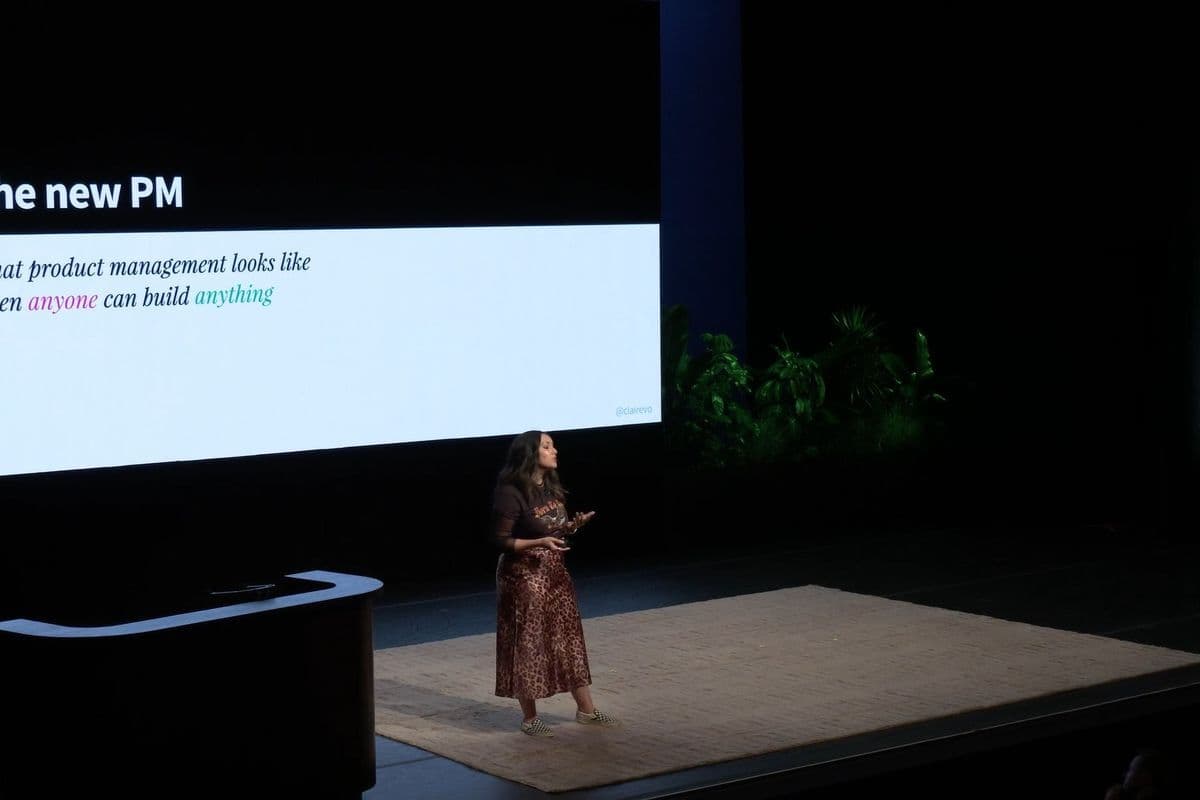
In the age of AI, where it feels like anyone can build anything, what does it mean to be a product person?
The job of deciding what to build, why to build it, and how to build it has changed more in the last few years than in my entire 20-year career in tech. I want to walk you through what I'm seeing, what's changing, and what fundamentally stays the same.

There's always been this maxim: “build something people want.” It’s the core of a founder’s job, a product person’s job. But for decades, we've gotten incredibly creative at not building things. Why? Because building was expensive, slow, and risky. Engineering was a precious, scarce resource that had to be protected. The job of a PM was largely to say “no.” We created entire systems—agile loops, backlogs, complicated PRDs that described how buttons should work, and even the beast known as SAFe—all designed to gatekeep and manage this scarcity.

Now, hold on. We've swapped those old systems for new ones: agent swarms, autonomous coding, multi-agent loops. And I’m seeing everyone writing more code than ever. An Anthropic chart showed engineers shipping eight times more code per quarter! But here’s the tough question I asked the audience: whose revenue is going up proportionately to the amount of PRs they’re shipping? The room was mostly silent.

This is the fundamental challenge of our moment. We're living in an age of abundance—token abundance, intelligence abundance, code abundance. But we don't have an abundance of things people actually want, and certainly not an abundance of things people will pay for. The constraint has shifted from engineering capacity to commercially viable ideas and market adoption. We have a generation of builders trained for a world of scarcity, and we need a new playbook for this world of abundance. This is that playbook.
The New Manifesto: 3 Pillars for Product People
If the old job was protecting engineering capacity, the new job is about finding direction, deciding what’s worth building, and proving it can matter commercially. I’ve broken this down into three core pillars. This is the new work. This is the new framework.

Pillar 1: Find the Money (Commercial Value & Behavior Change)
“Building what people want” is too vague. To make it real, you have to break it down into two distinct, gritty components that are often overlooked.

- Commercial Value: It's a little distasteful for some product people to talk about, but I think it's the most important question of our time: Will people pay to solve this problem? My hypothesis is that the real rate limiter in the AI era won't be shipping features, but finding commercializable ideas. The money will not just come. For example, I built myself a 64-song emo bracket for “March Sadness.” I wanted it, I built it, and it has a market of exactly one person: me. That’s personal software, not a business.
- Behavior Change: This is the other side of the coin, and it's where most products fail. Even if you identify a problem and build a solution, can you actually get people to change their lives or workflows to adopt it? Shipping a feature doesn't guarantee usage. My two decades in this industry have shown me that it's magical, and incredibly rare, when a product can actually drive real behavior change. Turning the screws on user experience, positioning, and distribution to achieve this is one of the hardest parts of product, and it's where we should be spending our time.
Pillar 2: Manifest Novel Ideas from First Principles
I have tried, very hard, to brainstorm with AI. It’s effective at exploring adjacent ideas and refining existing ones. But it’s not great at manifesting a truly novel future state—a vision that has no basis in today’s reality. For so long, we let this muscle atrophy. Building was expensive, so we became incrementalists, demanding data and evidence before daring to ask for a sliver of engineering time.
Now, with capacity unconstrained, the most valuable skill is having a unique vision and the conviction to build it absent any evidence. No model is going to confirm that your brand-new, world-changing idea will work. You can't A/B test your way into a paradigm shift. Having conviction and a clear vision is the job. It requires you to form an opinion about the future and then go and create it.
Pillar 3: Bring People Along (Distribution & Rizz)
The work doesn't stop when the code is shipped. In a world where anyone can build anything, your ability to bring people along on your journey is everything. This isn't just about customers; it’s about convincing the best talent to join you, partners to support you, and entire markets to follow you into the future you're building.
I’ve said it before and I’ll say it again:
Rizz is the only moat.
When anyone can code, ship, or build an agent, what truly differentiates you? It's your ability to articulate a vision and inspire people to invest in it—with their time, their money, and their belief. This is a skill that must be developed and exercised constantly, both internally with your team and externally with the market.

Don't Just Write Code—Build Companies
A couple of years ago, I predicted that AI would collapse the product stack, and I still believe the boundaries between roles will continue to blur. The title of Product Manager will likely survive, but the job is already fundamentally different. If your work doesn't feel dramatically different than it did two years ago, if you're not focused on these pillars, you're at risk. As I said in my talk, you might end up with a very big codebase and a very little company.
We can use AI as a shield, just like we used agile processes—to generate activity, to talk about how busy we are, to have a slop cannon of PRs firing constantly. Or, we can use it as an accelerant for a real vision and real market impact. Let's focus on making sure all this amazing technology lands somewhere meaningful.
This is the job now. Find the money, manifest novel ideas, and bring people along. Don't just write code—build companies.


